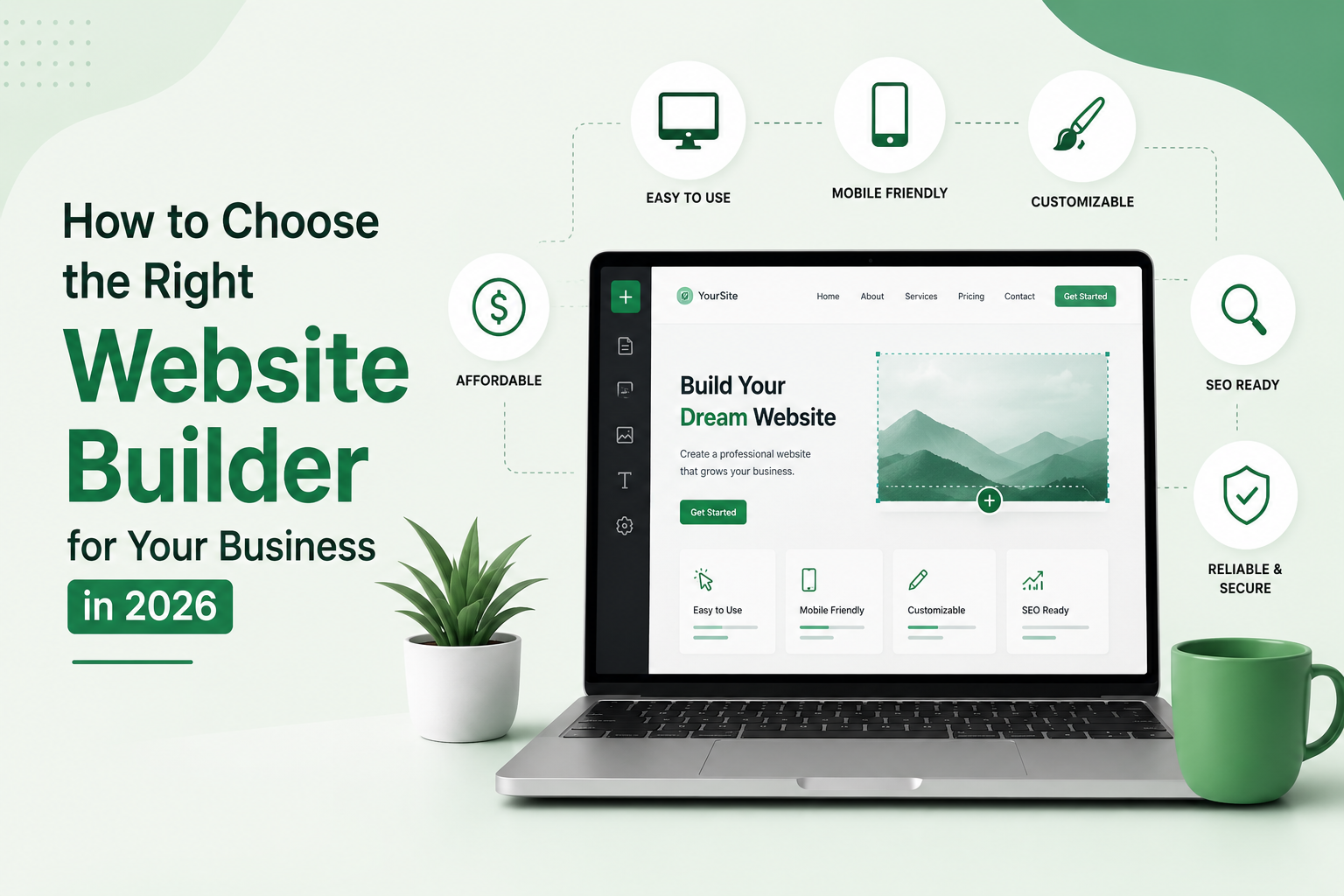
In 2026, building a successful website is no longer just about having an online presence. It is about performance, user experience, and conversion. With increasing competition across every industry, businesses and creators are turning to advanced tools to create websites that not only look good but also convert visitors into customers. This is where choosing the right website builder becomes critical.
Modern website builders have evolved dramatically. They now combine artificial intelligence, responsive design, built-in marketing tools, and conversion-focused features that help users create high-performing websites without coding. In this article, we will explore the best website builders of 2026 and, more importantly, the design elements that convert best when using a website builder.
Why Website Builders Matter More Than Ever in 2026
The digital behavior of users has changed. Visitors expect websites to load instantly, work perfectly on mobile devices, and provide a smooth, intuitive experience. If a website fails to meet these expectations, users leave within seconds.
A modern website builder helps solve these challenges by offering:
- Mobile-first responsive templates
- Built-in performance optimization
- Conversion-friendly layouts
- Integrated SEO and analytics tools
- AI-assisted design and content suggestions
In 2026, businesses no longer need custom coding to achieve professional results. The right website builder can deliver both design excellence and conversion power.
Top Website Builders to Watch in 2026
Before diving into design elements, it’s important to understand which platforms are leading the market. The best website builders in 2026 share one thing in common: they are designed around user behavior and conversion psychology.
1. Wix
Wix continues to dominate due to its ease of use and flexibility. Its AI-powered design assistant creates layouts optimized for engagement and conversions.
2. Shopify
For e-commerce, Shopify remains the top website builder. It is built specifically to maximize product visibility, trust, and checkout conversions.
3. Squarespace
Squarespace focuses on visual storytelling and clean layouts, making it ideal for brands that rely on aesthetics and credibility.
4. WordPress with Page Builders
When combined with builders like Elementor or Bricks, WordPress offers unmatched customization and conversion control.
5. Webflow
Webflow is preferred by designers who want full creative control and advanced interaction design while still using a visual website builder.
Each of these platforms supports modern design practices that directly influence conversion rates.
Design Elements That Convert Best in 2026
No matter which website builder you choose, success depends on how effectively you use design elements. Below are the most important conversion-driven design features in 2026.
1. Clear and Strategic Call-to-Action (CTA) Design
CTAs are the backbone of conversions. In 2026, effective CTAs are:
- Visually distinct with contrasting colors
- Action-oriented (“Get Started”, “Book a Demo”, “Buy Now”)
- Placed above the fold and repeated logically
- Supported by microcopy that reduces hesitation
Most website builder templates now include pre-optimized CTA sections because even small design improvements can significantly increase conversion rates.
2. Mobile-First and Responsive Layouts
Mobile traffic dominates the web, and this trend continues in 2026. A website that does not perform well on mobile will struggle to convert.
A modern website builder ensures:
- Touch-friendly buttons
- Readable typography on small screens
- Fast loading on mobile networks
- Adaptive layouts for different devices
Mobile-first design is no longer optional — it is essential for conversions.
3. Visual Hierarchy and White Space
Visitors scan websites instead of reading them word by word. Strong visual hierarchy guides the user’s eye toward the most important elements.
High-converting websites use:
- Large, clear headings
- Short paragraphs
- Bullet points
- Generous white space
These elements reduce cognitive load and help users make decisions faster. Website builders in 2026 prioritize clean, structured layouts for this reason.
4. AI-Powered Personalization
Personalization is one of the strongest conversion drivers in 2026. Many website builders now use AI to customize content based on user behavior, location, or intent.
Examples include:
- Personalized homepage messages
- Dynamic product recommendations
- Adaptive CTAs based on visitor type
Personalized experiences feel more relevant, which increases engagement and conversions.
5. Page Speed and Performance Optimization
Speed directly impacts conversion rates. Studies consistently show that even a one-second delay can reduce conversions significantly.
A good website builder includes:
- Optimized image handling
- Built-in caching
- Lightweight code
- Fast hosting infrastructure
In 2026, performance is not just a technical concern — it is a design priority.
6. Trust Signals and Social Proof
Users hesitate to convert if they do not trust a website. High-converting designs include trust elements such as:
- Customer testimonials
- Reviews and ratings
- Security badges
- Clear contact information
- Transparent policies
Most modern website builders offer built-in sections for social proof, making it easy to build credibility.
7. Simple and Smart Forms
Forms are often the final step in conversion, whether for lead generation or checkout. In 2026, high-converting forms are:
- Short and focused
- Using smart field validation
- Offering autofill and suggestions
- Designed with clear labels and spacing
A website builder that supports advanced form customization gives you a clear conversion advantage.
8. Consistent Branding and Typography
Consistency builds trust. Websites that use consistent fonts, colors, and styles feel more professional and reliable.
Website builders now allow global style controls, ensuring:
- Brand consistency across all pages
- Better readability
- Strong emotional connection
A consistent design makes users feel confident in taking action.
9. Interactive Micro-Elements
Micro-interactions such as hover effects, button animations, and progress indicators improve user engagement.
When used correctly, they:
- Provide feedback to user actions
- Make the site feel responsive
- Guide users toward conversion points
Modern website builder platforms include subtle animations that enhance usability without overwhelming users.
10. Accessibility and Inclusive Design
Accessibility is not just about compliance — it improves overall user experience.
High-converting accessible design includes:
- Readable font sizes
- High color contrast
- Keyboard navigation support
- Clear labels and structure
Inclusive websites reach a wider audience and reduce friction, leading to better conversion outcomes.
Choosing the Right Website Builder for Your Goals
The best website builder depends on your specific needs:
- E-commerce: Shopify
- Small business or personal brand: Wix or Squarespace
- Content-heavy or SEO-focused sites: WordPress
- Custom, high-end design: Webflow
Regardless of the platform, success depends on how well you apply conversion-focused design principles.
Future of Website Builders Beyond 2026
Looking ahead, website builders will continue to integrate:
- Deeper AI-driven UX optimization
- Automated A/B testing
- Voice and gesture-based interactions
- Built-in marketing automation
The line between design, marketing, and analytics will continue to blur, making the website builder a complete growth platform rather than just a design tool.
Conclusion
In 2026, building a website is not about coding skills — it’s about making smart decisions. Choosing the right website builder and applying proven design elements can dramatically improve engagement and conversions.
To summarize:
- Use mobile-first, fast, and clean layouts
- Focus on clear CTAs and visual hierarchy
- Leverage AI personalization and performance optimization
- Build trust through design and content consistency
When design and technology work together, your website becomes more than a digital brochure — it becomes a conversion engine.
The best website builders of 2026 are not just helping people build websites. They are helping businesses grow.